ALAINPAUL X ANDAM/NATHALIE X TELMA Special Talk Session
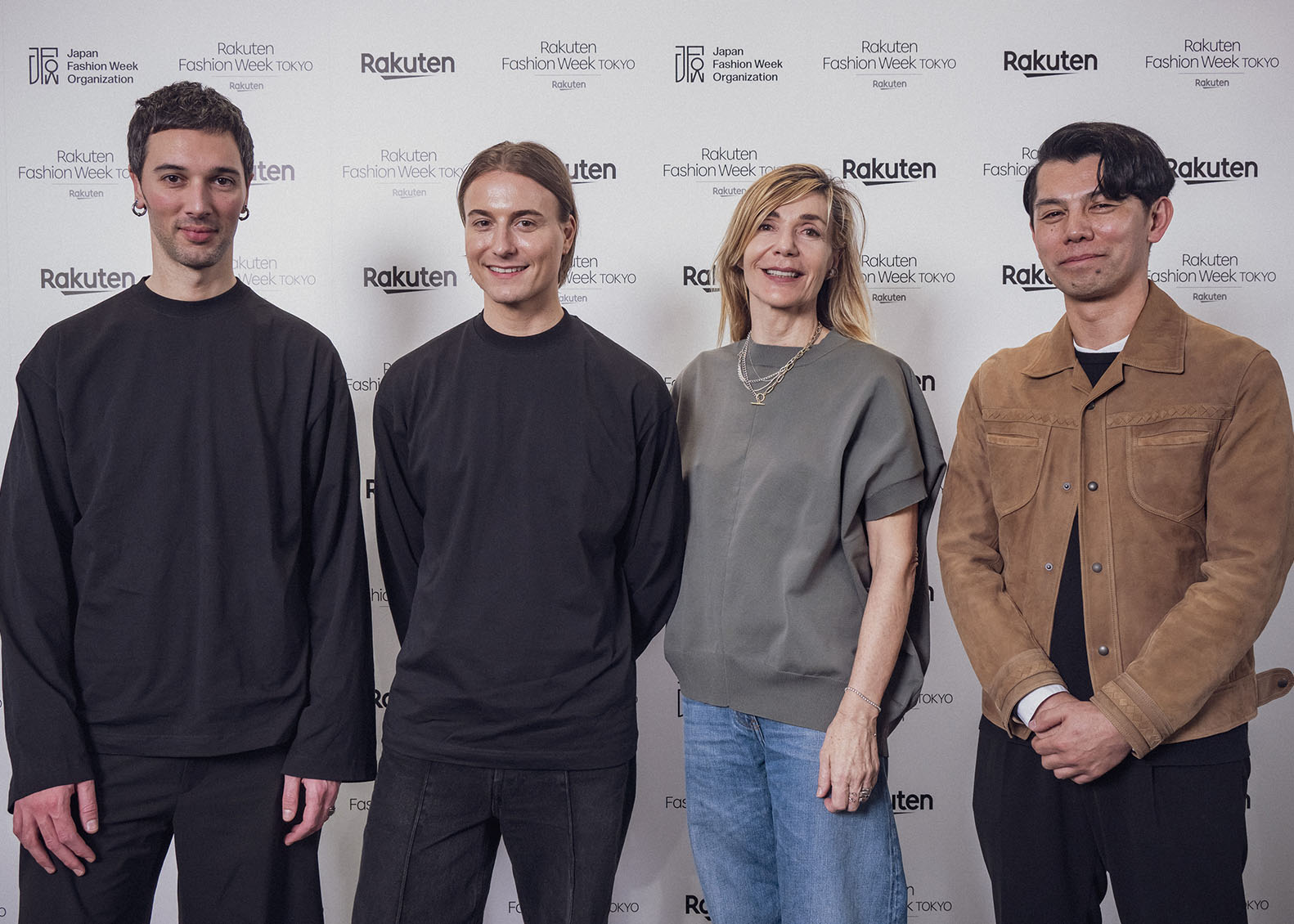
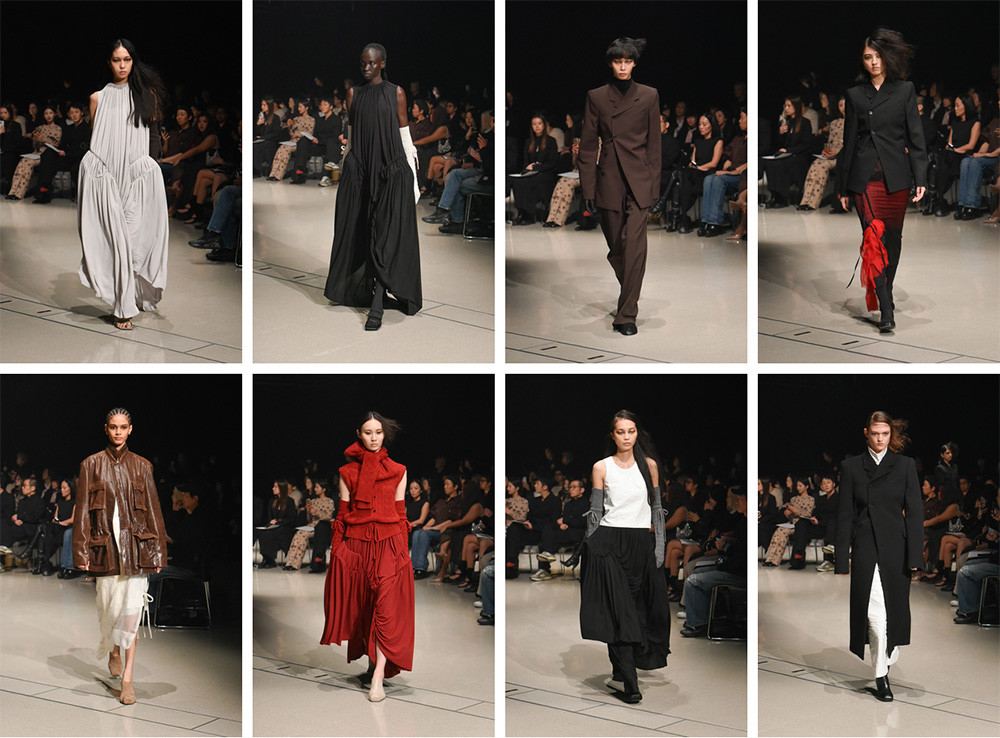
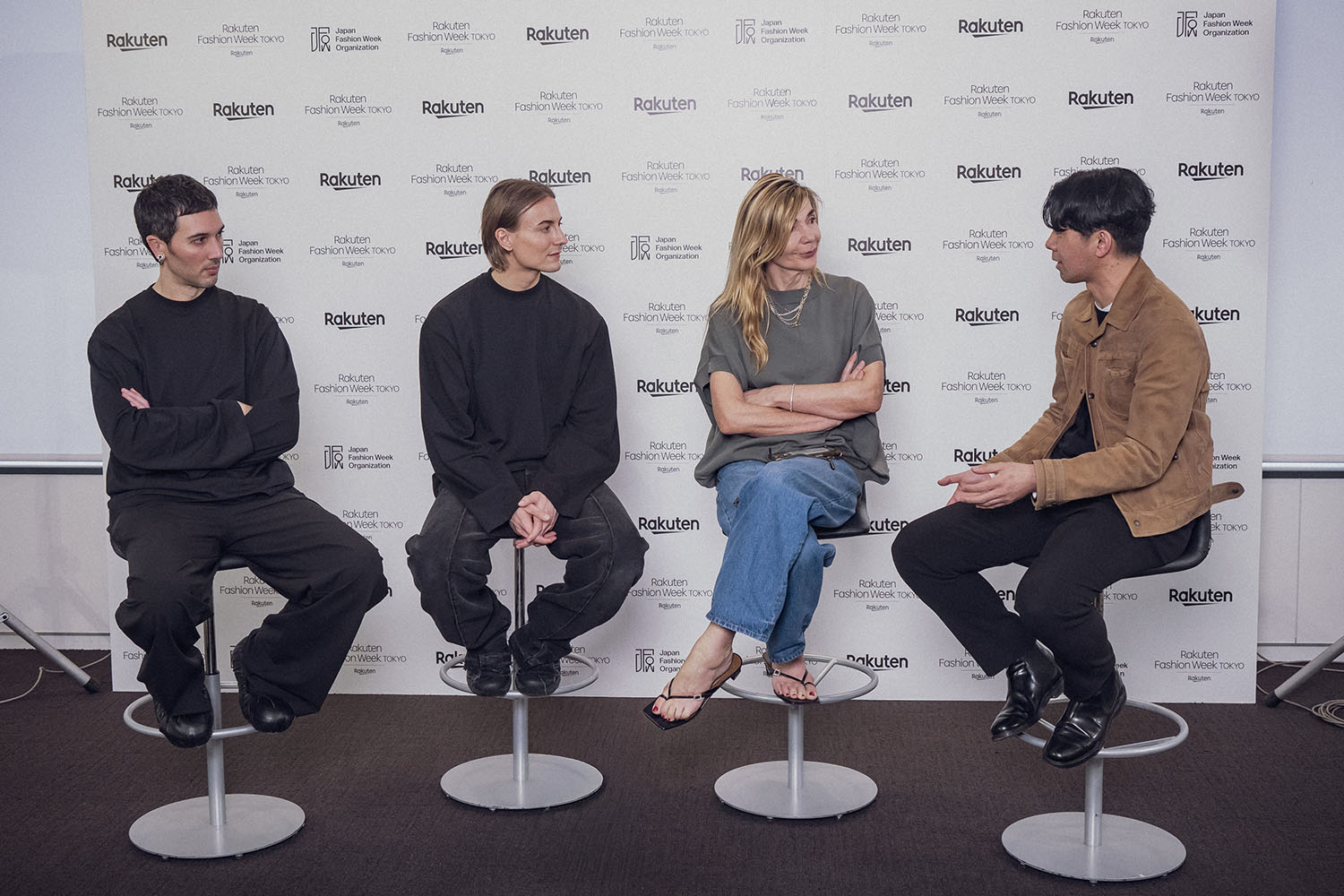
Through a collaboration between RUN x ANDAM FASHION AWARDS PARIS and JFWO, ALAINPAUL staged its first-ever runway show in Tokyo during RakutenFWT 26A/W. Known for its distinctive aesthetic sensibility and sculptural forms informed by a background in contemporary ballet, the brand received the Special Prize at the 2025 ANDAM, which made this initiative possible. During the same season, ANDAM—an award based in France that discovers and supports emerging designers on a global scale—held its first event in Japan at the official venue, Shibuya Hikarie, together with RUN (WSN Group), the Paris-born showroom. This special talk session brought together ANDAM founder Nathalie Dufour, Terumasa Nakajima of TELMA, recipient of the JFW NEXT BRAND AWARD 2025, and Alain Paul and Luis Philippe of ALAINPAUL, fresh from presenting their show, for a conversation about approaches to creative practices that resonate across borders.
How are Japanese brands perceived by internationally active designers and by a founder committed to nurturing new talent? What distinguishes them from European brands, and what will be required for the future of creation?
──ALAINPAUL on their first runway show in Japan
Alain: Everything went incredibly well—it feels like a dream. This opportunity allowed us to work together with an amazing team, including the production crew. Our goal was to bring to Tokyo the same sense of wonder we create in Paris, and I believe the lighting and music helped us achieve something truly beautiful.
Nathalie: I’ve seen their shows in Paris too, and both the casting and music were outstanding. For ALAINPAUL, presenting a runway in Tokyo that fully reflects the brand’s aesthetics and concepts is deeply significant. The success of this show marks an important step.
Nakajima: First of all, I want to say that it truly was a beautiful show. We live in a time when businesses and their products are held to ever-higher standards of completion, but this collection demonstrated a remarkably clear creative perspective; I was especially drawn to its purity. I was also struck by the approach to fashion not simply as form but as a relationship between the body and fabric. The physicality and strength gained through his dance training came through in the designs, not only as formal beauty but with a real sense of presence.
──Perspectives on the Japanese fashion market
Nathalie: I haven’t seen much yet, but I get the sense that Japanese designers draw on a mix of tradition, history, and Japanese pop culture. The younger generation, in particular, has a deep intellectual foundation grounded in their education. Compared to Japanese designers of the 70s, like Yohji Yamamoto and Rei Kawakubo, they seem to be more influenced by Japanese tradition. That fusion, between a return to historical background and contemporary pop culture, is what makes the new generation so compelling.
Nakajima: I think Japanese designers are very skilled at editing. Especially in recent years, I have the impression that more brands are becoming consciously engaged with their cultural backgrounds and personal sensibilities.
Alain: I agree, I feel that the younger generation in Japan has a remarkable ability to create distinctive worlds. As Nathalie said, alongside expressions rooted in traditional garments and techniques, their use of tools to create visual expressions feels very futuristic and forward-looking.
Nathalie: There’s a sense of coherence in the shows, with a clear focus on each brand’s individual identity, so you can immediately get a sense of what each brand stands for. The level of professionalism is also very high. TELMA too has a very consistent vision, while offering variety within its creations. There’s also a clear sensitivity to product.
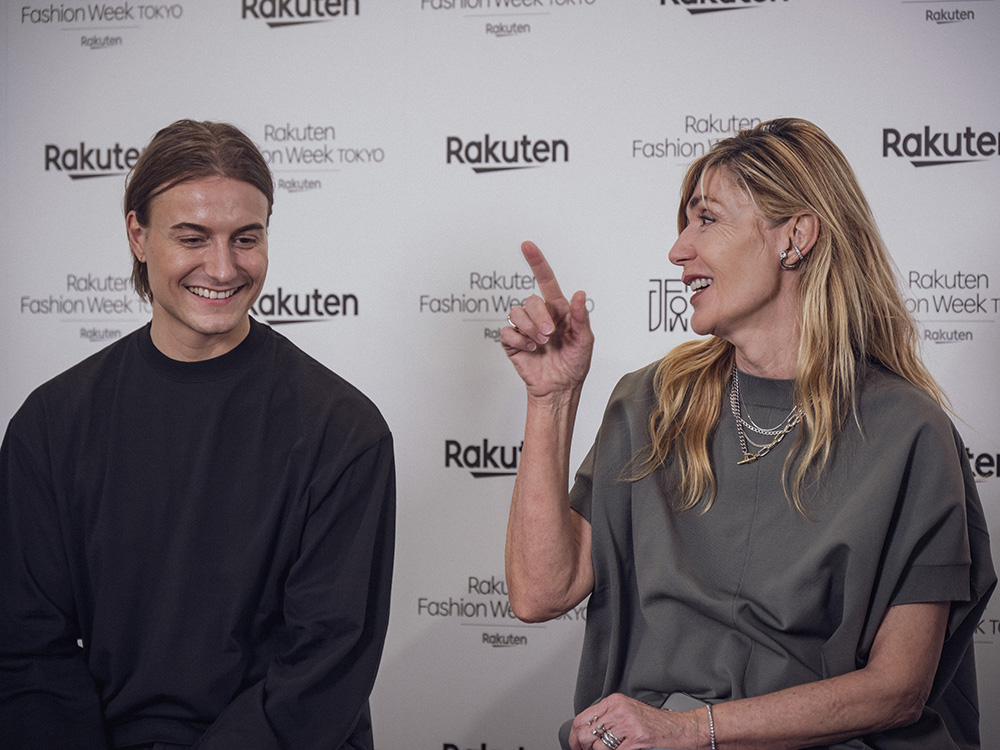
Nakajima: Thank you. When I think about creation, I inevitably consider its balance to business, but I try to place importance on personal emotions and experiences as my starting point. When I was working in Europe, I often developed ideas based on the social and historical context of clothing, but after returning to Japan, I’ve shifted toward developing work from more personal motivations and then giving those ideas form.
Alain: Nakajima-san, you studied and worked in Europe and are now based in Japan. What differences do you notice in the way people work in these two places?
Nakajima: Well, maybe it’s a difference between making mono (tangible objects) or koto (intangible things). In Japan, there is a strong focus on making products of very high quality, whereas in Europe, there is more emphasis on the concept—that difference feels quite significant.
Alain: In terms of fabrics and processing techniques, it seems like Japan has more options than Europe.
Nakajima: Japanese production regions offer very high levels of technical skill and precision. Each region specializes in particular materials, which means we have many choices. The ability to work with producers who are so skilled and knowledgeable, and able to accommodate highly detailed requests, is a big advantage for Japanese designers.
──What defines a designer with future potential?
Nathalie: The ones that have an as-yet unrealized, raw form of creativity. Something that hasn’t been marketed, and is still rough around the edges, not yet shaped into a product—that is often where truly groundbreaking potential lies.
With ALAINPAUL, there is always this process of “deconstruction” in relation to the body and clothing. That ongoing search, its very progression, forms the brand’s identity, which I find fascinating. It’s about the balance between deconstruction and reconstruction. Even now, there is a quality that feels slightly raw; the construction isn’t fully resolved. By continuing to evolve with each collection, each moment carries significance, and each step is worthy of recognition.
──Impressions of TELMA
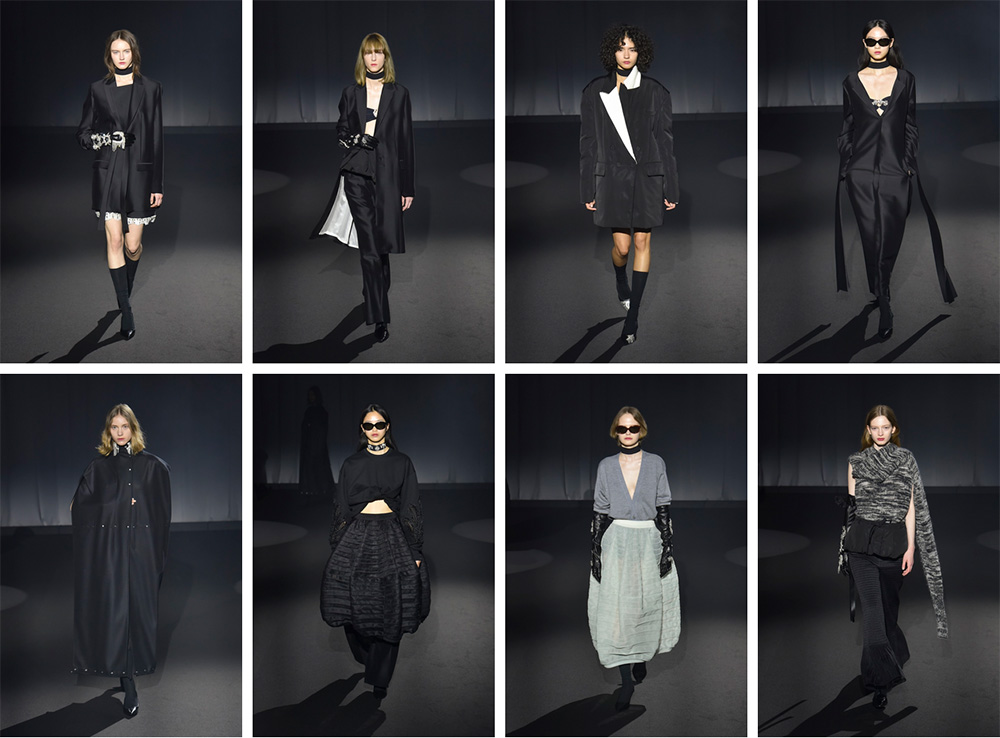
Nathalie: I was impressed by TELMA’s technique, combination of textiles, precision, and highly original prints. You can see the influence of Nakajima’s studies in Antwerp in the use of color, and the brand’s clear relationship to the deconstruction and reconstruction of objects. I also found the interpretation of Japanese traditional garments, reminiscent of the kimono, wonderful, reimagined in a way that feels modern, fresh, and refined.
To establish a brand on a global scale, it needs to possess a worldview so rich that it feels almost limitless. A strong, coherent vision, but one that also has depth. TELMA has a very strong identity, which is why I am confident it can develop over a long time. Maintaining the level of quality and complexity in material and form that is expected of the brand will not be easy, but I hope he can continue to meet that challenge and create that sense of luxury.
──On the future of fashion and creation
Alain: Paris remains the center of the fashion world, but presenting collections in markets like Tokyo and New York is a very stimulating experience. Showing in places we haven’t before allows us to engage directly with local communities, share our work with people who may not come to Paris, and reach new potential customers. The opportunity to communicate directly with members of the local fashion industry who love clothing is invaluable.
I genuinely love creating collections. Shows and campaigns are expressions of those collections, and, as Nathalie said, they are also a way to continually renew and expand the brand’s evolving vision each season. It’s about maintaining a distinct brand identity while evoking different emotions in each viewer. With each collection, it feels like we are building a kind of code, one that allows the brand to evolve as audiences encounter new emotions.
This year, I also designed costumes for the Paris Opera House. These weren’t garments to be sold or worn in daily life; their pursuit is something more artistic, and the process of creating them was deeply rewarding. I remain passionate about the runway, but I think it is also important to occasionally step outside the fashion system and engage in creative, artistic projects like this, as a way of growing the brand’s community and universe.
Twice a year, we are tasked with speaking publicly. Twice a year, we have the opportunity to communicate what ALAINPAUL is, our values, our thinking, and what we seek through fashion. While it’s not impossible to keep sharing our message, it is frankly difficult for young, independent brands to maintain a strong vision while operating with a system largely shaped by big corporations and houses.
Nakajima: I share Alain’s perspective. I think it will become increasingly important for brands to share their values and worldview from many perspectives, not only through two annual shows but also through special projects and collaborations across fields. We must see fashion not merely as a product but as culture, and, as creators of that culture, we need to continue telling stories in our own words.
Personally, I want to keep exploring forms of expression beyond clothing and continue developing and challenging the brand’s philosophy and perspective more broadly.
Luis: From my perspective, ALAINPAUL is already communicating a strong vision and brand identity with its community. That’s why one of our key goals moving forward is to continue expanding that community around the brand.
Alain Paul was born in Hong Kong in 1989. In 1997, he moved to France with his family and, the following year, enrolled at the École Nationale Supérieure de Danse de Marseille—now home to the dance company (La)Horde. He grew up immersed in the rigor and refined aesthetics of contemporary ballet.
At the age of 18, seeking new forms of expression, he left dance to study fashion in Paris. After completing his studies, he joined the young fashion house Vetements in 2014, drawn by Demna’s radical and innovative vision.
From 2018 to 2022, he was part of Virgil Abloh’s studio at Louis Vuitton, contributing to the Men’s Ready-to-Wear collections and playing a role in merging modernity with craftsmanship. In 2023, he founded his eponymous fashion house, ALAINPAUL.
Nathalie Dufour
A graduate of the Institut Supérieur des Carrières Artistiques (ICART Paris) in 1983, Nathalie Dufour also studied at the École des Hautes Études en Sciences Sociales and at the École du Louvre, Contemporary Art section, in 1985. She began her career in 1988 as Head of the Fashion Department within the Visual Arts Delegation of the Ministry of Culture and Communication. In 1989, with the support of Jack Lang, then Minister of Culture, and Pierre Bergé, President of DEFI, she founded the Association Nationale des Arts de la Mode.Nathalie Dufour sits on the Board of Directors of the Hyères Festival and UFAC, and has been a Knight of the Legion of Honour since 2016 and of Arts and Letters since 2018.
Terumasa Nakajima
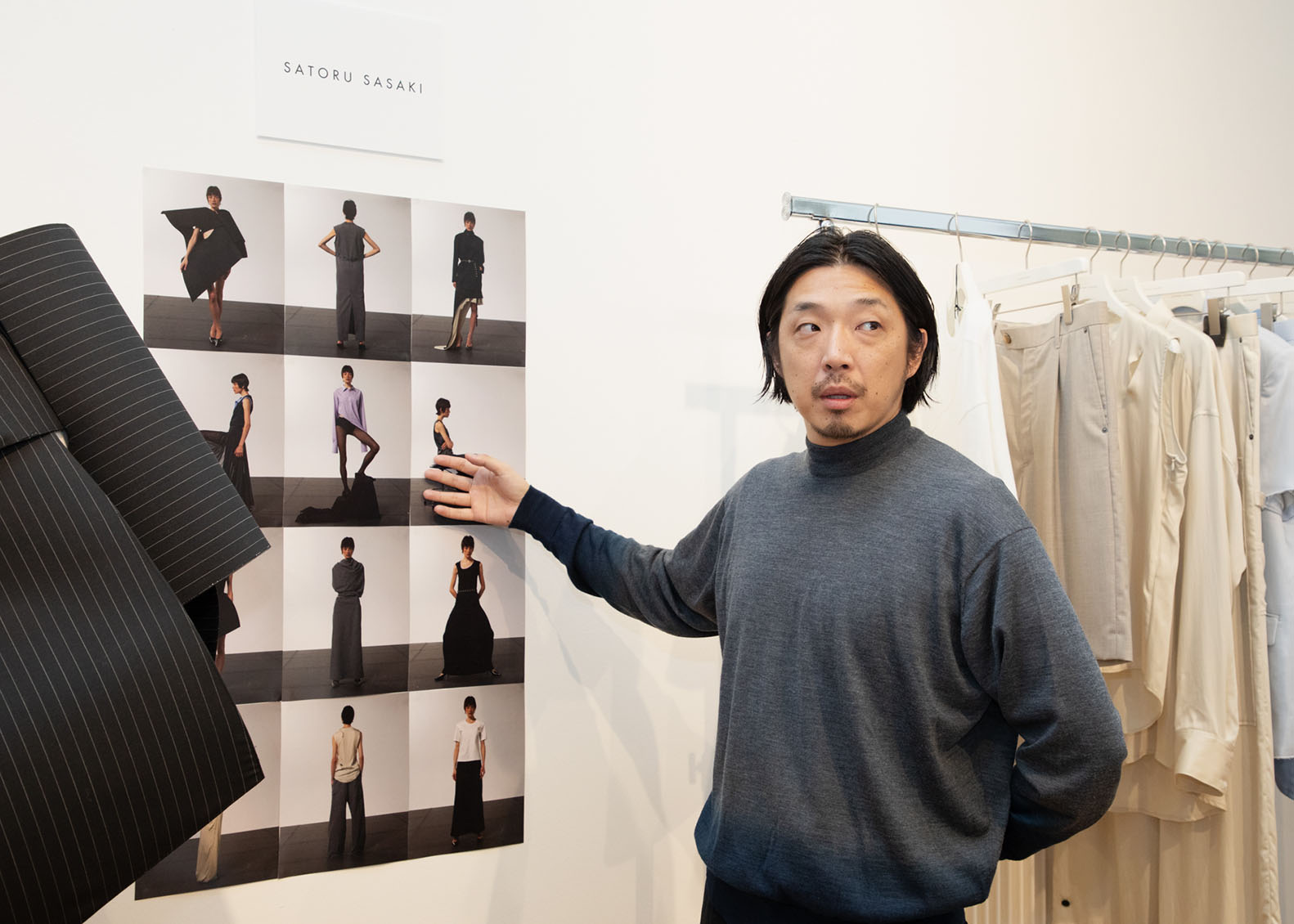
Graduated from the Royal Academy of Fine Arts Antwerp in 2010 and received both the Christine Mathys Award and the Louis Award for the graduation collection, which was displayed in the windows of Louis, a notable boutique in Antwerp. In the same year, Nakajima joined Dries Van Noten as an assistant to the designer for the women’s collection. After returning to Japan, he joined ISSEY MIYAKE in 2014, where he learned how to design from the concept of a single “Piece of Cloth” and develop textile, incorporating the finest craftmanship from various areas of Japan. TELMA was launched in 2022.
ALAINPAUL
[URL] https://alainpaulstudio.com/
[Instagram] https://www.instagram.com/ALAINPAUL/
ANDAM (Nathalie Dufour)
[URL] https://andam.fr/
[Instagram] https://www.instagram.com/andamfashionawards/
TELMA (Terumasa Nakajima)
[URL] https://telma.jp/
[Instagram] https://www.instagram.com/telma.jp/