ssstein Kiichiro Asakawa | FASHION PRIZE OF TOKYO 2025 Award-Winning Brand Interview
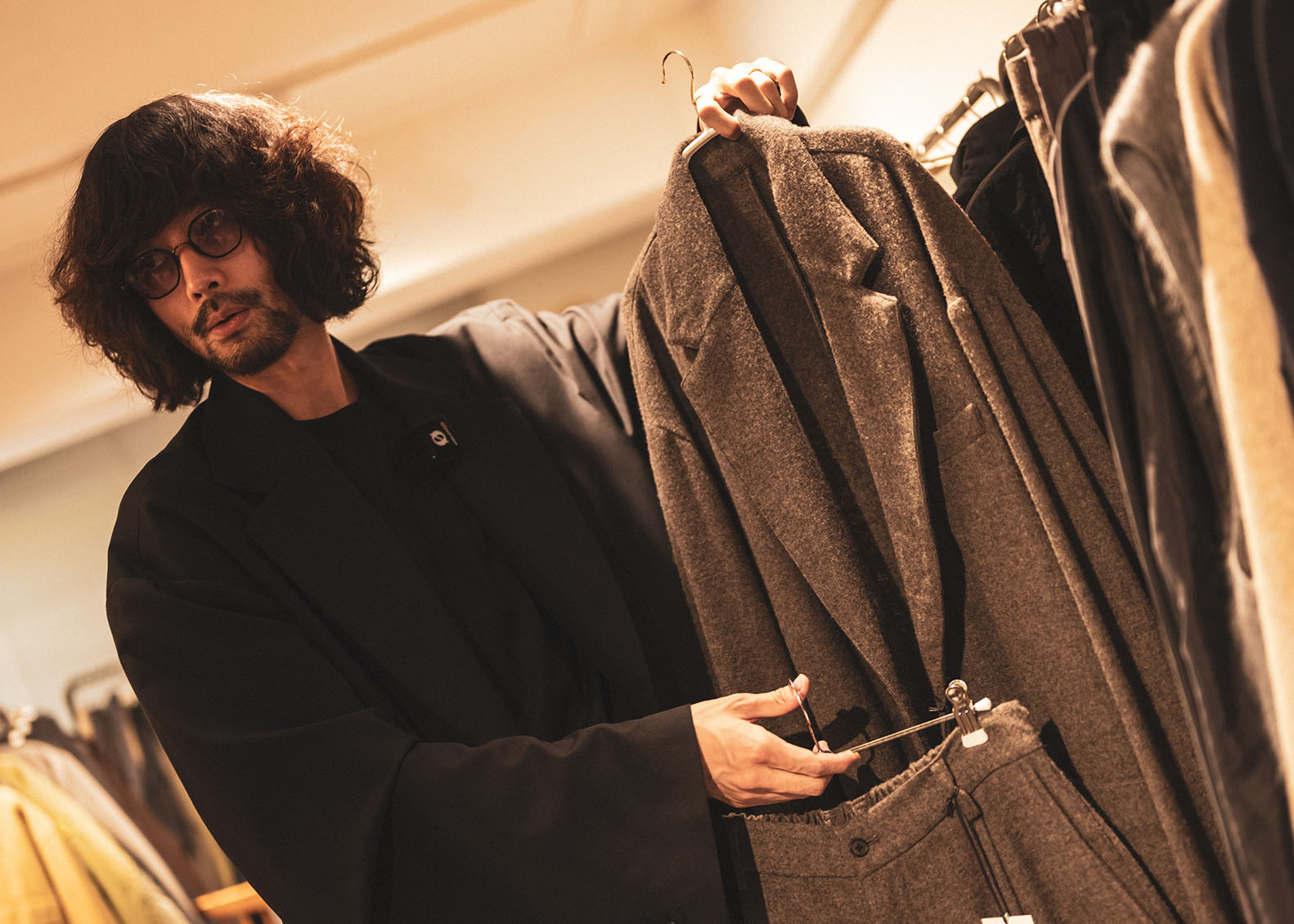
Founded in 2016 by Kiichiro Asakawa, ssstein is a genderless fashion brand that evokes a sense of both serenity and strength. The brand held its first runway show at Rakuten Fashion Week TOKYO in 2023. Following this, in 2024, it received the FASHION PRIZE OF TOKYO 2025, leading to its first collection presentation in Paris earlier this year.We interviewed Mr. Asakawa, who continues to steer this brand renowned for its meticulous attention to material selection and distinctive silhouette expression, to discuss the journey so far and what lies ahead following these two international presentations.
The brand will celebrate its 10th anniversary in 2026, a major milestone. What journey led you to your current position?
The brand started with me taking vintage clothes that I handled at my own store, carol, and remaking them to sell to customers. Before that, I was studying garments on my own, but I began to deconstruct and sew vintage pieces, reassembling them into pants in a way that suited my customers at the store, aiming to improve certain aspects that I felt were lacking. From the 2018 S/S season, I began showcasing collections to wholesalers in an exhibition format, gradually broadening the scope of my expression. By 2019, the number of our retail partners had increased. It was around the 2024 A/W season that I felt our design direction truly began to embody the brand’s present sensibility—creations that are effortless and natural to wear, yet possess a unique and memorable presence. The core desire to create minimal, static beauty has remained unchanged since the brand’s inception, but it was at this time that I felt the mood I wanted to convey had finally taken shape as a collection.
What elements make up the mood you want to convey?
After the pandemic made it difficult to meet people, I rediscovered the joy of casually meeting up, talking, or going out to eat, and it made me realize just how luxurious it is to spend time with someone. Having family and friends, and being able to see them regularly—that felt incredibly comforting and precious. I wanted to channel those emotions into my work. This led me to focus on creating pieces that look stylish even when you just step out casually, or that simply make you feel more positive just by wearing them effortlessly every day.
It sounds like your creations are deeply rooted in everyday life.
There are so many moments in daily life where you think, “This is nice.” Even when work gets overwhelming and I lose a bit of perspective, I always want to be in a mindset where I can appreciate what is stylish and beautiful. I feel like I gather the appealing points of various elements I absorb daily—from classic, vintage, and modern fashion to various products—and weave them into the brand’s mood. There are also many details I personally refuse to compromise on, so our team engages in deep, ongoing discussions about every aspect of our craftsmanship.
Furthermore, while it may be idealistic, my goal is for everyone involved with the brand to be happy. Our collections come to life thanks to the cooperation of fabric suppliers, sewing factories, and workshops that boast diverse skills. I would be delighted if our continued efforts could help stabilize the working conditions and wages of all our partners, thereby creating a positive, sustaining cycle.
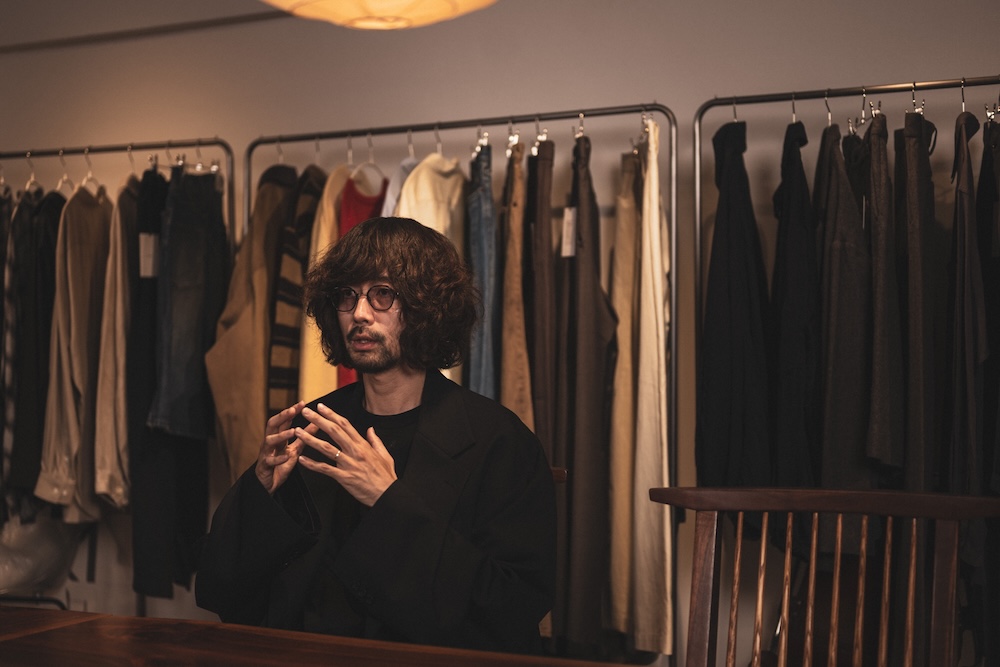
Regarding the 26 S/S season announced in Paris in June, could you tell us about the collection’s theme?
Since the overarching theme of our collections does not change significantly each season, we continue to pursue a fundamental minimalist aesthetic with a dignified strength. We designed the collection with an image where colors are experienced through the filter of the wearer—like the subtle blues and greens found in Corinne Day’s photography, or a lava-like beige. These are not defined as theme colors, but rather colors that are conveyed as they interact with the wearer’s aura. We express these hues specifically through the fuzziness of the material and the translucent yarns we spin.
Do you sense that overseas buyers fully understand the story behind your work?
Some buyers certainly do understand this narrative, but others simply make their selections based on the clothing itself or the runway presentation. Since the level of comprehension varies, we do our best to convey our intent as thoroughly as possible through advance preparations, such as press releases.
Could you also share an overview of your current business situation?
For the most recent 26 S/S season, we are working with approximately 50 domestic accounts and 65 international accounts. Rather than aggressively pursuing expansion, we prioritize building thoughtful, long-term relationships with the stores we partner with. Until last year, we had fewer than 30 international accounts. However, winning the FASHION PRIZE OF TOKYO led to our presentation in Paris, which significantly boosted our recognition, and the number of stores visiting our Paris showroom has definitely increased. Furthermore, while we primarily offer sizes S, M, and L, many female customers purchase and wear our men’s sizes. This has led to the launch of partnerships with women’s specialty stores overseas. Although our international expansion started in Asia, we are now seeing an increasing number of stores in Europe and the United States.
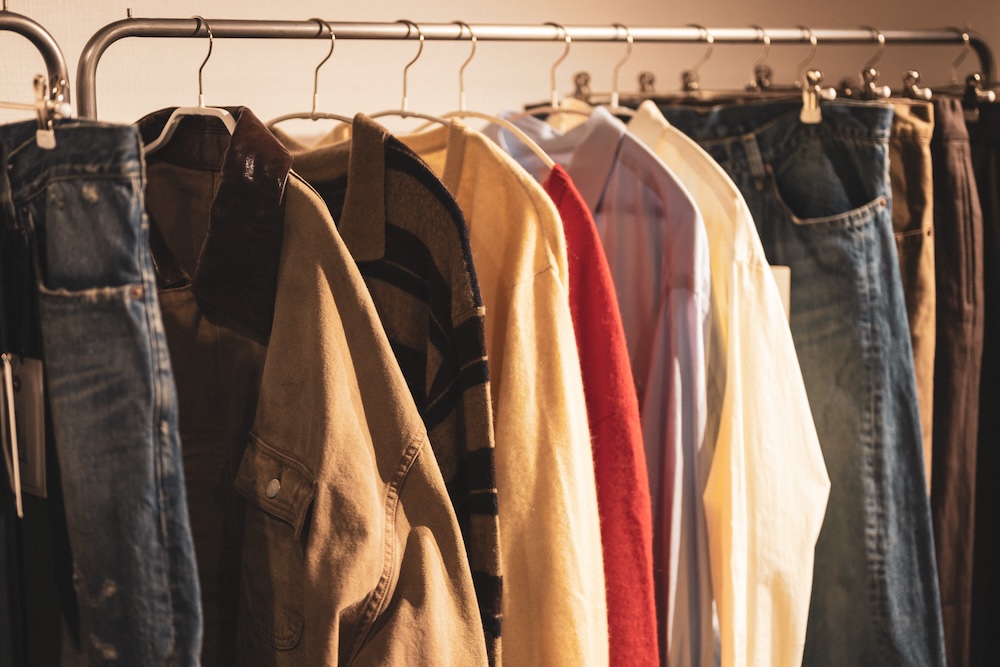
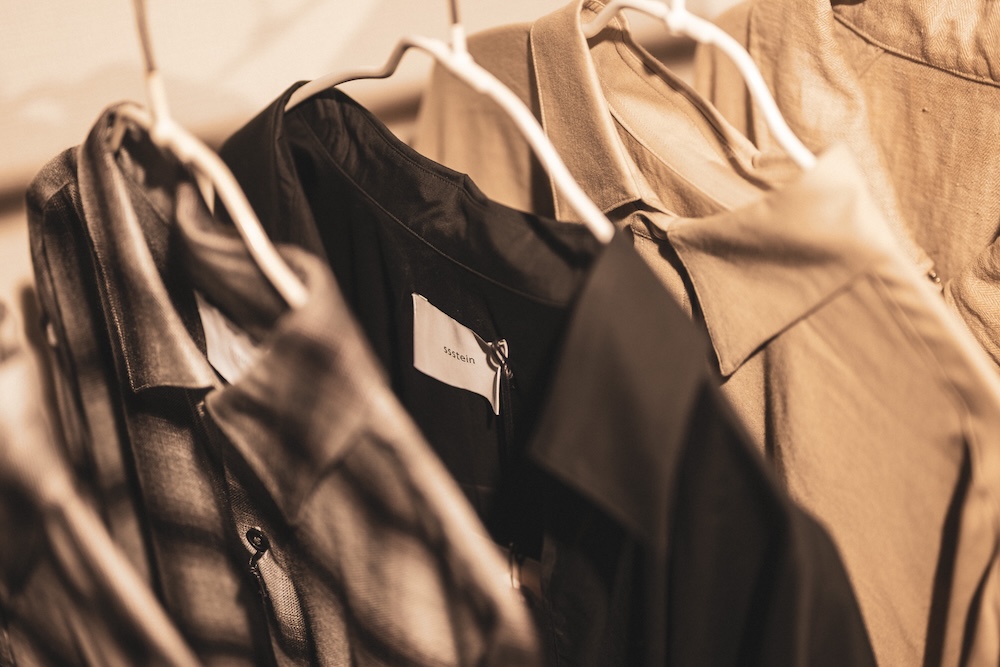
What mindset did you approach the collection presentation in Paris with?
First and foremost, the opportunity to present in Paris was something I was truly grateful for and frankly, delighted about. Our mindset wasn’t to try something entirely different just because it was Paris. Instead, we approached it by digging deeper into what we already hold dear and what we genuinely want to express, aiming to present something of the highest possible purity as a brand.
When I visited Paris, I sensed that many buyers held a very positive view of Japanese brands. Thanks to the achievements of designers like Rei Kawakubo and Yohji Yamamoto, and more recently, Mr. Iwai of AURALEE, Japanese brands have a strong reputation for high-quality craftsmanship among buyers. This allows us to be viewed with a positive disposition from the start. We are truly grateful for the legacy built by our predecessors, and we certainly aspire to achieve that same respected position when presenting in Paris.
After two presentations in Paris, do you feel a sense of accomplishment?
We had heard from others that Paris often reacts strongly to impactful, powerful products. However, we received a positive response and a strong sense of validation for the minimalism, the textiles, and the other brand-defining points that we value. Having those aspects recognized and appreciated as they gave us the confidence that we do not need to “tune” the brand for the international market. Instead, what matters is continuing to refine our own precision and deepen our vision
What challenges lie ahead in refining the purity of your collections?
While we take pride in creating better products year after year, we want to pursue those elements that “evoke a mood” even within aspects that might seem ordinary—specifically in terms of sewing, fabric, color development, and silhouette. Through repeated presentations, we’ve recognized areas for improvement not only in the craftsmanship but also in the way we present the collection. We feel it is necessary to confront each of these areas individually and raise our standards.
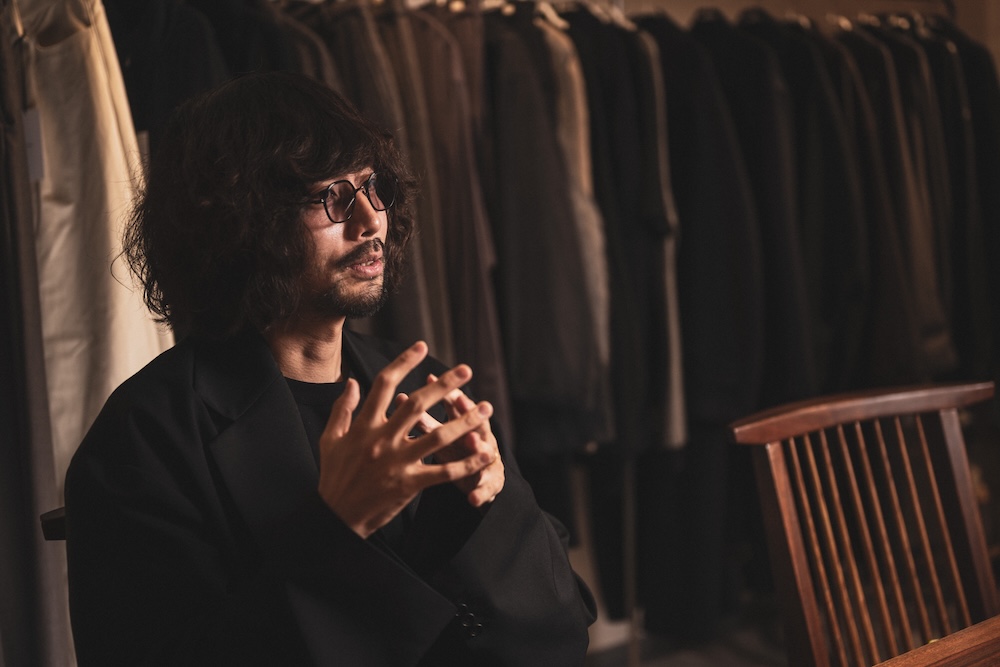
What do you prioritize in your presentation approach?
For our customers and business partners, I personally document and share detailed information about every product each season—including how each fabric is constructed and the technical specifications that form the silhouette. I believe that even if a piece of clothing appears ordinary at first glance, communicating these precise details can change the way it is received. Of course, I don’t think it’s necessary to convey absolutely everything, but I try to leave space for interpretation while offering the background and story that create the mood, tailoring that delivery to each customer.
Please share your vision for the brand’s future.
I believe the future involves staying true to the brand’s core identity, focusing intently on the product right in front of us, and continuing to create and deliver items with meticulous care. We are also preparing to launch new items for the brand, such as footwear and accessories. Furthermore, as demand for women’s wear is increasing, we hope to gradually introduce styles that reflect a more feminine aesthetic.
Is there anything you personally would like to challenge yourself with?
Since I genuinely love making clothes, it’s always going to be about continuing to create clothes! However, I also believe that engaging in various forms of creation across different categories can offer new perspectives. I am interested in approaches like studying other fields in order to bring a distinct filter and fresh ideas into the process of clothing design.
How has this past year been for you since winning the FASHION PRIZE OF TOKYO 2025?
First and foremost, receiving such a prestigious award was a deeply gratifying experience. The timing was especially meaningful, as the award coincided with our strong desire to seriously challenge ourselves in the international market. I feel that it became a major turning point for the brand, bringing a tangible expansion of recognition both domestically and internationally. We intend to continue presenting in Paris, and this past year has truly been the catalyst that made that ongoing commitment possible.
Photography by Daichi Saito
Interview by Tomoko Kawasaki
[ Website ] https://ssstein.com/
[ Instagram ] https://www.instagram.com/ssstein_design/