MIZEN | First Participation Questionnaire
Brand information / About the designer
── What inspired you to become a fashion designer? Describe developments leading up to the brand launch.
From an early age, I was deeply drawn to European culture and design. Attending middle and high school without uniforms naturally led me to develop a strong interest in European fashion. When I encountered the work of Alexander McQueen, I was profoundly struck—particularly by the sculptural silhouettes and the radical structural transitions within his garments.
What fascinated me most, however, was not the fashion illustration itself, but the pattern making. I began to realize that a pattern is not merely a technical blueprint; its structure can itself be design. My interest gradually shifted from “drawing clothes” to “constructing clothes.” At the time, I did not fully understand the distinction between designer and pattern maker, but I had already become captivated by clothing as structure.
After spending a year preparing for entrance exams, I entered the Department of Architecture at Kyoto University. Yet my desire to study garment construction persisted, and I enrolled in a night fashion school to learn the fundamentals of making clothes. Through those connections, I co-founded a fashion collective with friends, and over time I found myself devoting more energy to fashion than to architecture.
While continuing architectural design studios, I had the privilege of receiving encouragement from Professor Shin Takamatsu, which ultimately led me to pursue fashion professionally.
My first position was at Yohji Yamamoto. Having chosen this path, I set a personal goal to work at European luxury maisons. Through a series of meaningful encounters, I went on to work with Carol Christian Poell, Agnona, and later Hermès.
During those years abroad, I often sensed a particular expectation placed upon me as a Japanese. This led me to reflect deeply on what uniquely Japanese strength might mean, and what role I, as a Japanese creator, could fulfill within the global context.
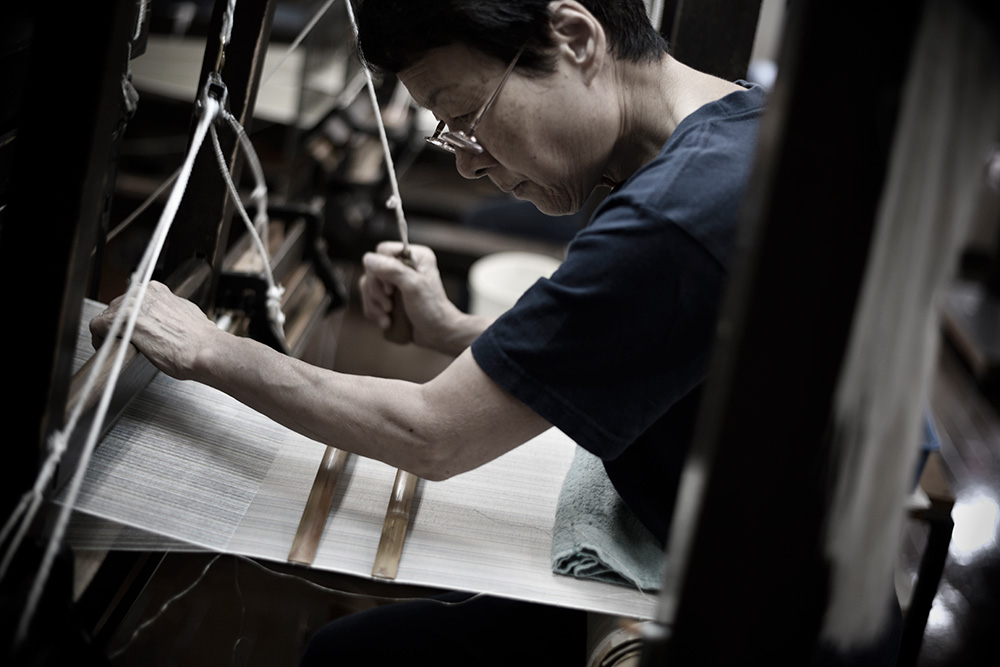
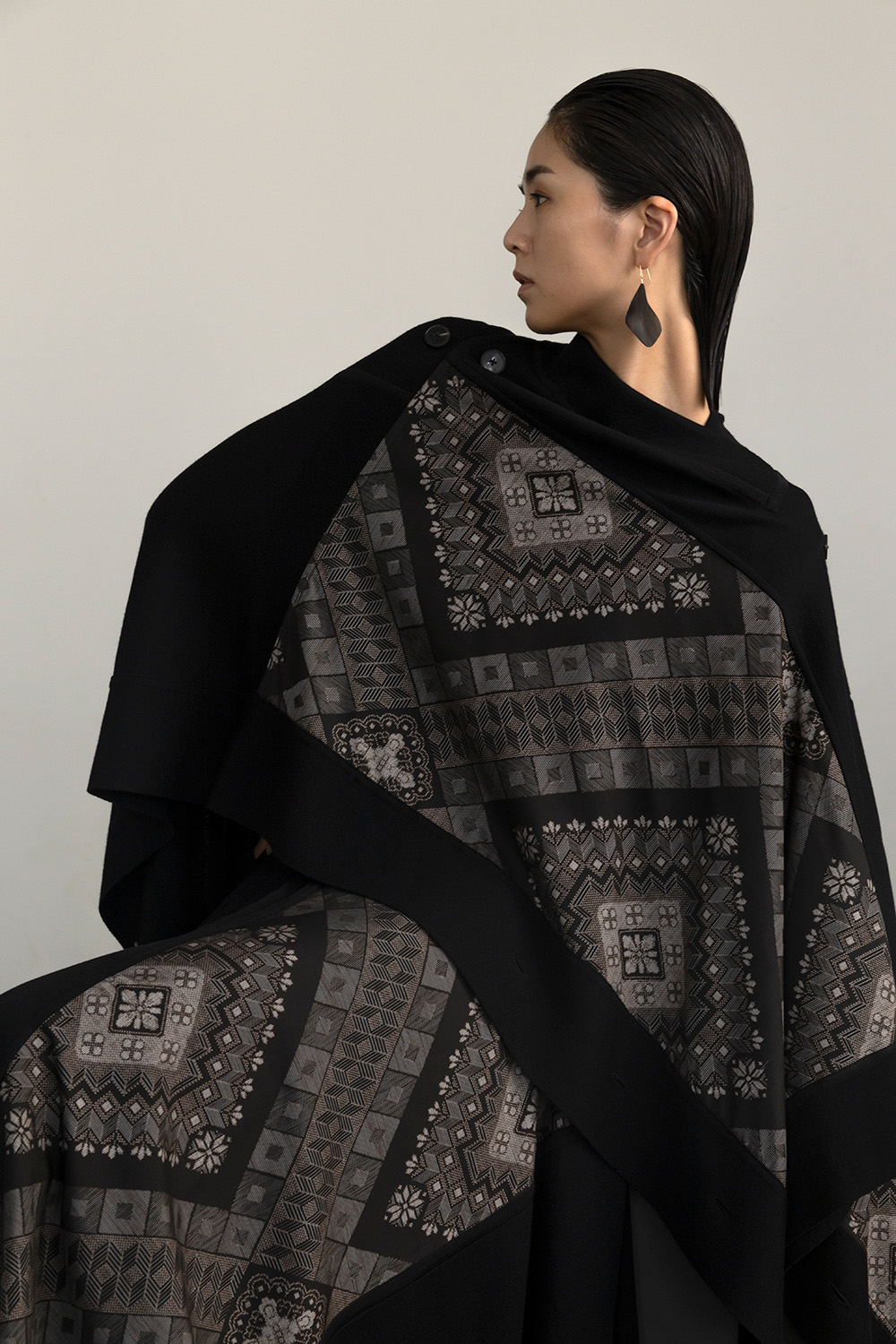
A decisive turning point came in February 2016 at Première Vision Paris, where I encountered kimono textiles in a new light. I rediscovered the extraordinary depth of Japanese handcraft—the accumulation of time embedded within each material and structure.
At the same time, I recognized that the temporal rhythm in which traditional craftsmanship exists is fundamentally incompatible with the speed-driven structure of contemporary fashion. In an industry that prizes immediacy and efficiency, techniques cultivated over generations struggle to find their rightful place.
I began to question whether time itself could be repositioned as value.
Rather than consuming traditional craftsmanship as mere “material,” I felt compelled to create a new value system—one in which the time, structure, and human presence behind each technique become central.
This conviction led to the founding of MIZEN.
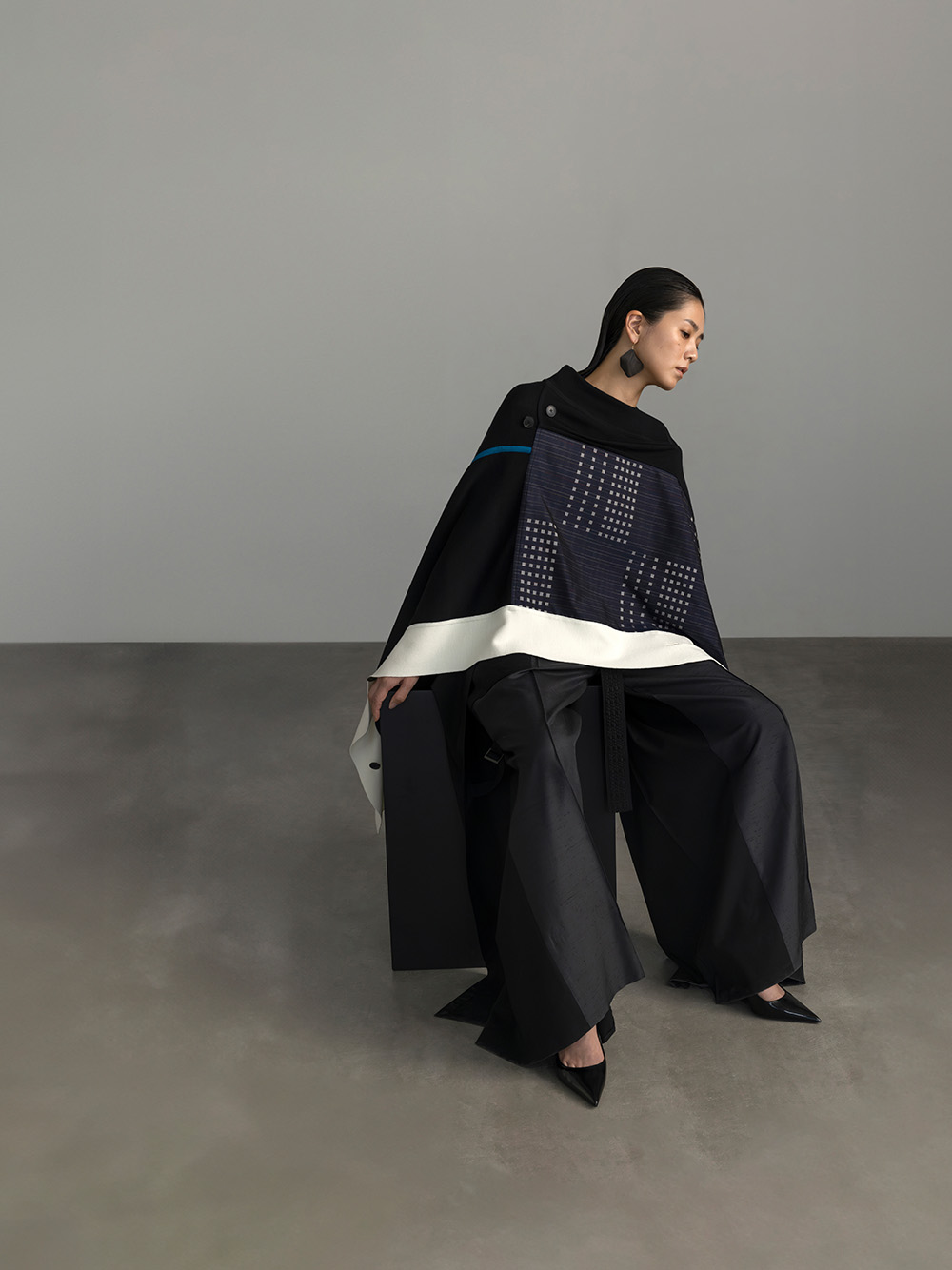
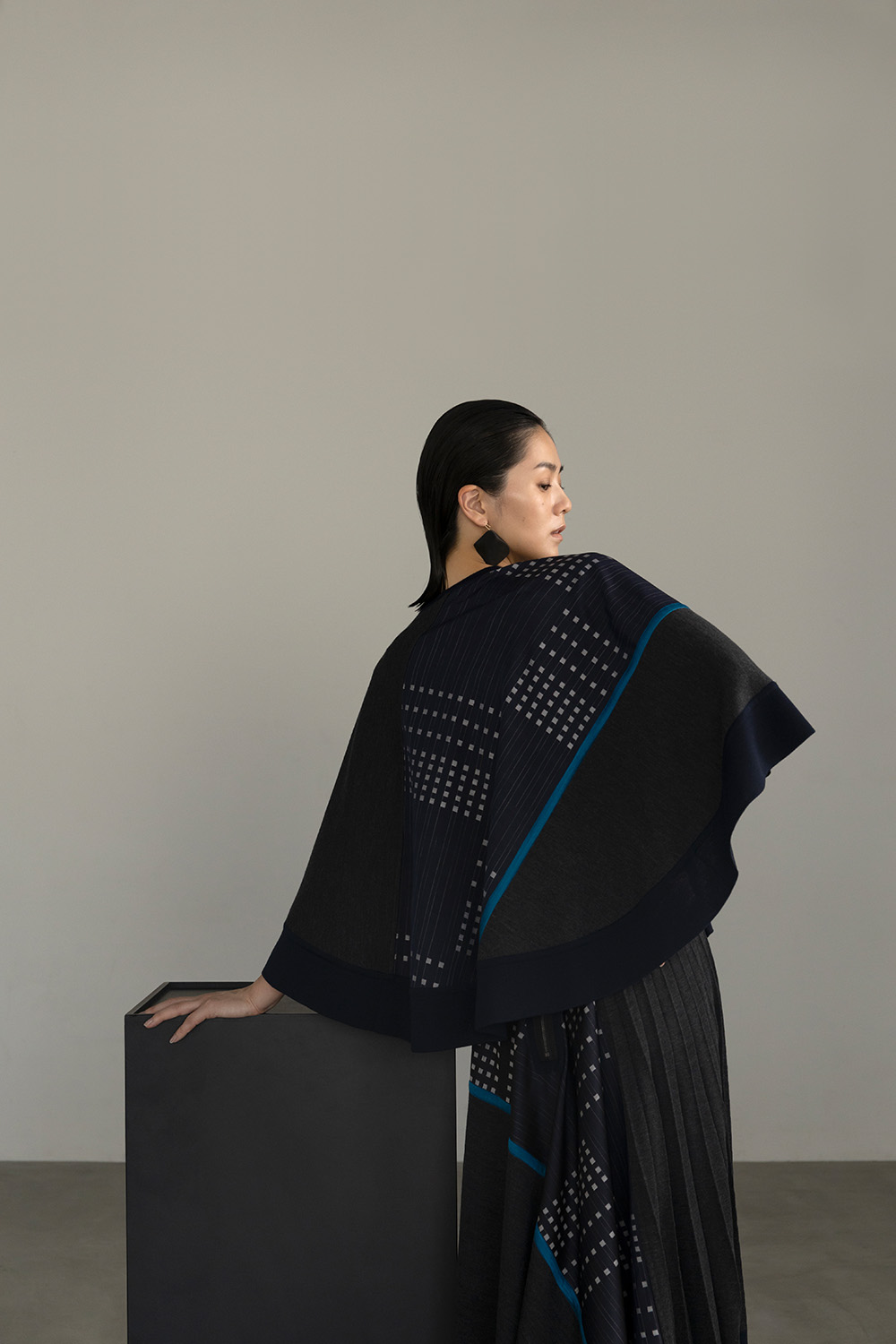
MIZEN is not simply a fashion brand, but a project that reconnects Japanese traditional craftsmanship with the present. Instead of prioritizing speed or visual immediacy, we seek to present space—yohaku—in which the wearer interprets, reflects, and overlays their own life onto the background of the garment. Through this process, we propose a new understanding of luxury: one rooted not in surface, but in depth.
── What is the brand’s concept? What do you want to communicate through fashion designing?
At MIZEN, we do not consider clothing itself to be the true “product.” What we aim to deliver is the story that exists behind it. Garments are merely the medium—the vessel through which those stories are conveyed.
Contemporary fashion operates on speed. Within that system, technique and background narratives are often treated as optional—valuable perhaps, but not essential. At the same time, with the rise of the internet, social media, and now AI, images that are “beautiful,” “cool,” or “cute” can be generated effortlessly, even without physical existence. We are entering an era in which the meaning of fleeting visual appeal is being fundamentally questioned.
Consumers today increasingly seek a reason—an authentic justification—for why they choose to spend their money. The ability to articulate a story that provides that sense of conviction is becoming ever more important.
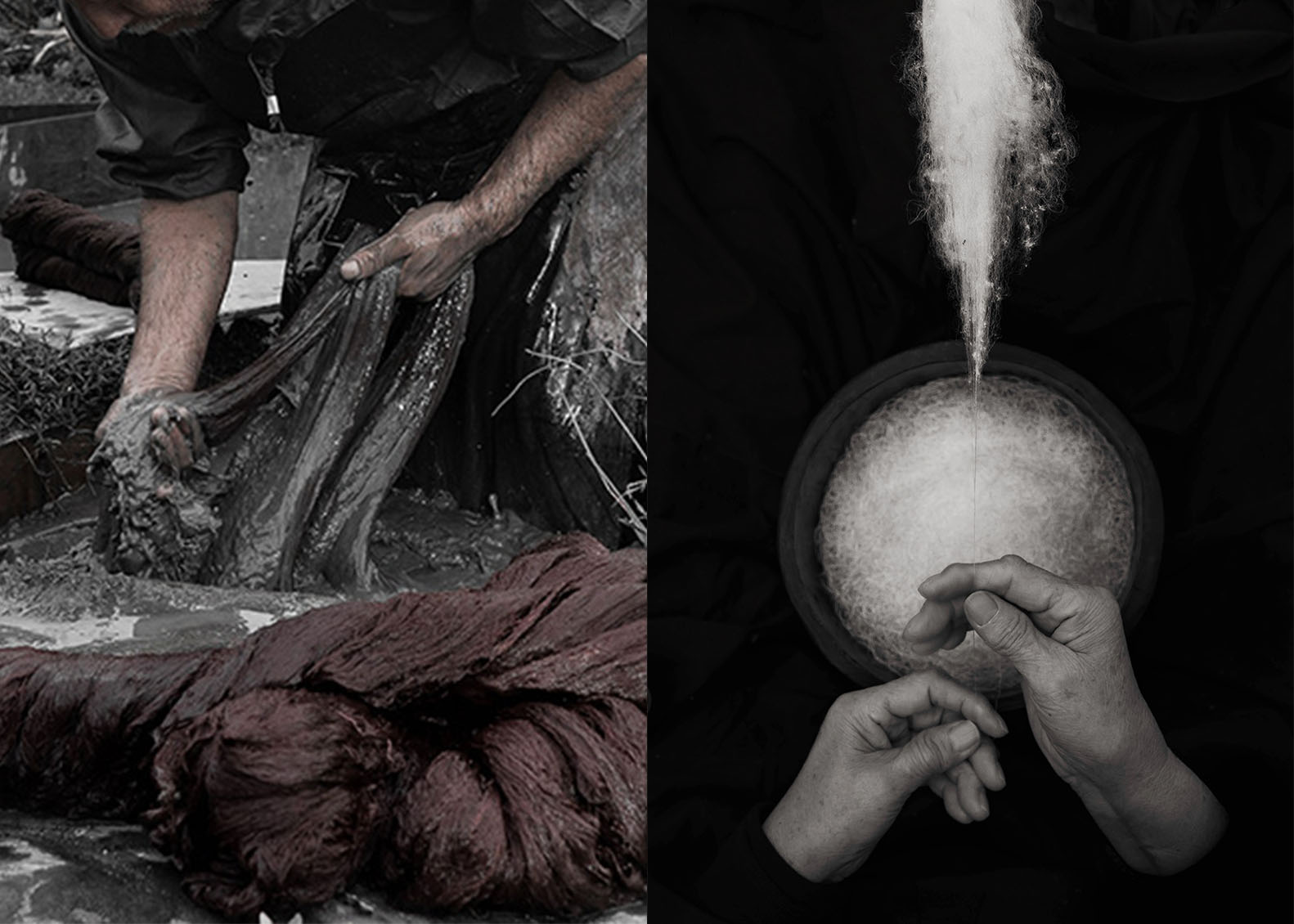
At MIZEN, we have chosen handcraft as the axis of that story. Within handcraft resides the accumulation of countless human experiences and time. Its value is not fixed; it expands infinitely depending on how it is interpreted. In other words, the worth of handwork is shaped by the one who encounters it, offering multiple paths toward personal conviction.
However, arriving at that conviction requires time. Under the dominant, speed-driven modes of evaluation in contemporary fashion, such value is often overlooked. This is precisely why we believe it is necessary to slow down—to cultivate the perspective of seeing the essence of things with what we call the “inner eye,” allowing time to reveal depth.
The men and women we propose through MIZEN are not defined by trends or surface aesthetics. They are individuals who choose consciously, guided by their own values. They read the background of what they wear and layer it with their own life experiences. In this sense, fashion is not completed by the designer alone—it is completed through interpretation by the wearer.
We believe that expanding this value system will ultimately elevate the presence of those engaged in handcraft around the world. Through fashion—a cultural language already shared globally—we aim to broaden this way of seeing and, in doing so, allow craftsmanship to shine with renewed dignity.
── What is your source of inspiration in creating fashion? What is your process of developing a design concept?
In much of contemporary fashion, technique is often employed as a means to realize the designer’s vision. At MIZEN, however, we approach this relationship from the opposite direction. We begin by asking: how can we design in a way that allows the technique itself to shine?
For us, the most essential element of creation is the story behind each garment. Of course, the designer’s intention is part of that narrative. But it extends far beyond a single perspective. It includes the history and environment in which a textile was born, the process through which the material was developed, the sewing techniques employed, and the many individuals whose hands and time are embedded within a single piece.
Our concept-making process is therefore an act of editing and framing these layered stories—deciding which aspects to bring forward and how to give them form. We see design not only as shaping silhouette or surface, but as revealing the time, structure, and human presence that already exist beneath.
Ultimately, our intention is to invite the wearer into this process. When someone encounters a MIZEN garment, we hope they feel a sense of curiosity: What story lies behind this piece? The time spent imagining, discovering, and interpreting that answer is itself part of the value we propose.
To see, to learn, to interpret—
the time that flows through that process is what we consider a new form of richness.
── Who are your current stockists (areas, retail formats, etc.)? Describe the typical followers of your brand.
At present, MIZEN does not operate through wholesale channels. Until now, we have focused primarily on direct engagement, placing importance on carefully communicating the philosophy and the stories behind each piece.
We see our participation this season as an opportunity to meet retail partners—both in Japan and internationally—who deeply resonate with our values. Rather than simply expanding distribution, we hope to connect with stores that are willing to share and convey the narrative and worldview behind MIZEN together with us.
The people who are drawn to MIZEN are those who seek to understand the background of what they wear before forming an evaluation. They do not judge solely on surface beauty. Instead, they layer the story behind a garment with their own life experiences, transforming it into something personal. They find richness in that process of interpretation itself.
In this sense, our audience possesses both depth of thought and a sensitivity that appreciates yohaku—the space that allows meaning to unfold.
For them, dressing is not mere consumption, but an act of interpretation and conscious choice. The ability to choose according to one’s own values, rather than simply following trends, is what defines the MIZEN community.
── Which brands, designers, styles and cultures have had the most impact on your fashion designing, and why?
My initial turning point in fashion was encountering the work of Alexander McQueen. Through his collections, I came to understand that pattern cutting itself can become a central element of design. The tension created through silhouette and structure fundamentally shifted my perception of fashion—from decoration to construction.
Later, I was deeply influenced by Carol Christian Poell. Even today, his presence continues to shape my thinking. If I were to describe him, I would say he is a designer who “designs technique itself.” His work does not merely present form; it embeds the beauty of process and construction within the design. The way he reveals technique rather than conceals it resonates strongly with my own approach and is closely aligned with the philosophy that underpins MIZEN.
I was also profoundly influenced by Stefano Pilati, particularly in his approach to styling. Until then, my focus had been primarily on the individual design of garments. Working with him allowed me to discover the power of styling as a form of technique in its own right—an act capable of creating context and meaning. I came to understand that significance emerges not only from a single piece, but from relationships and composition.
Throughout these influences, I have consistently been drawn to structure and technique. Today, however, I seek to engage with them not as tools for personal expression alone, but as means to reveal the time, human presence, and layered narratives that exist behind each garment. That perspective forms the foundation of MIZEN.
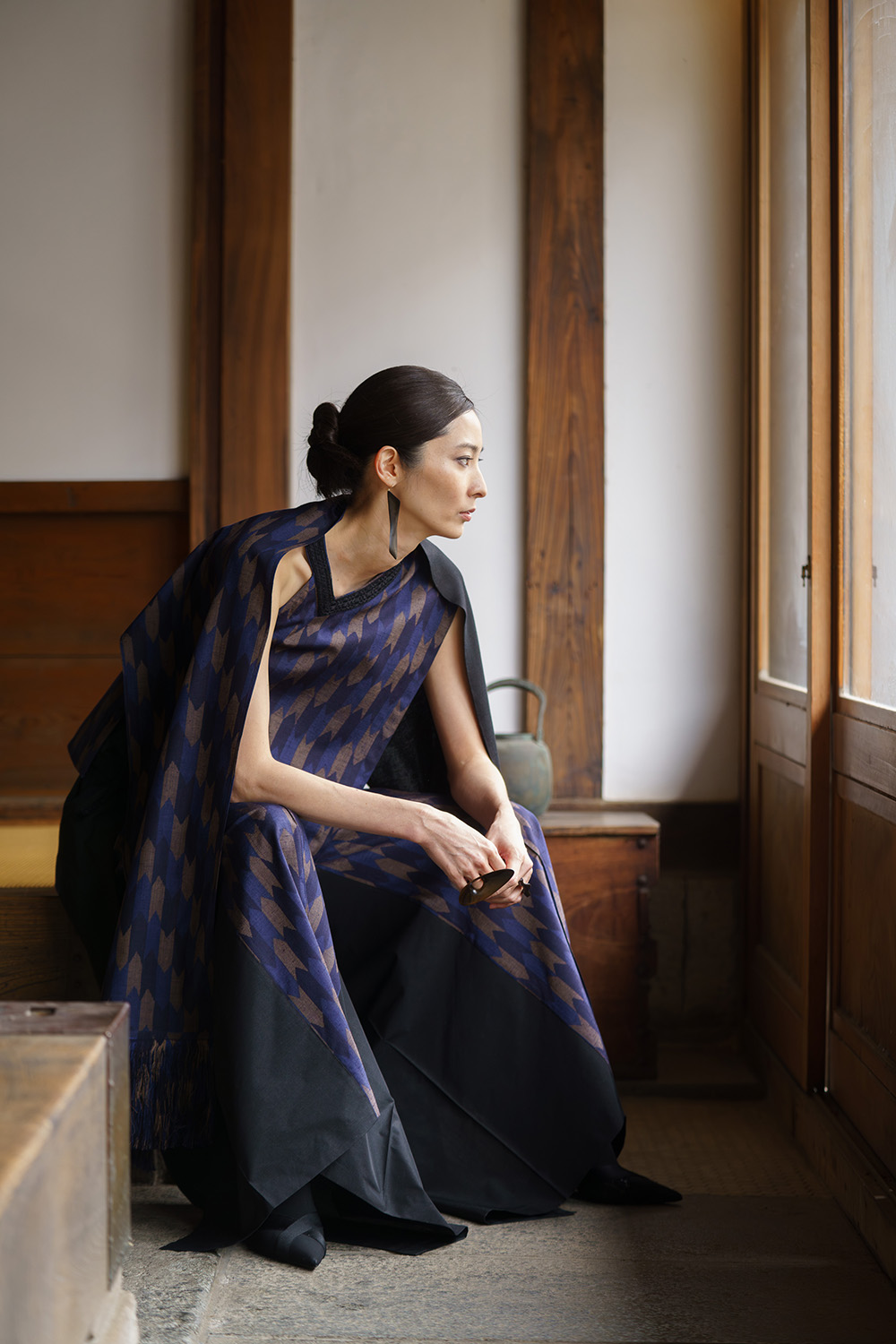
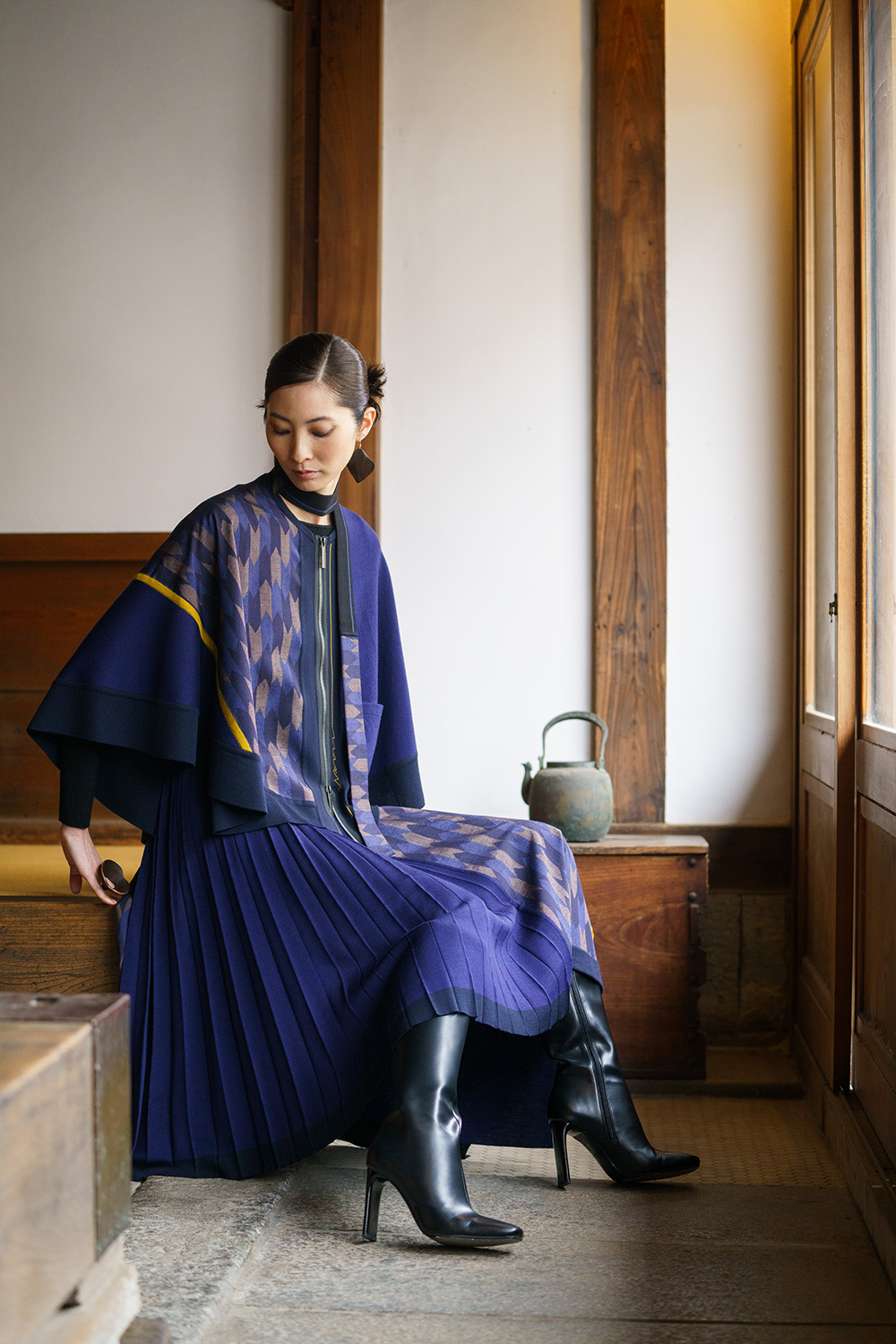
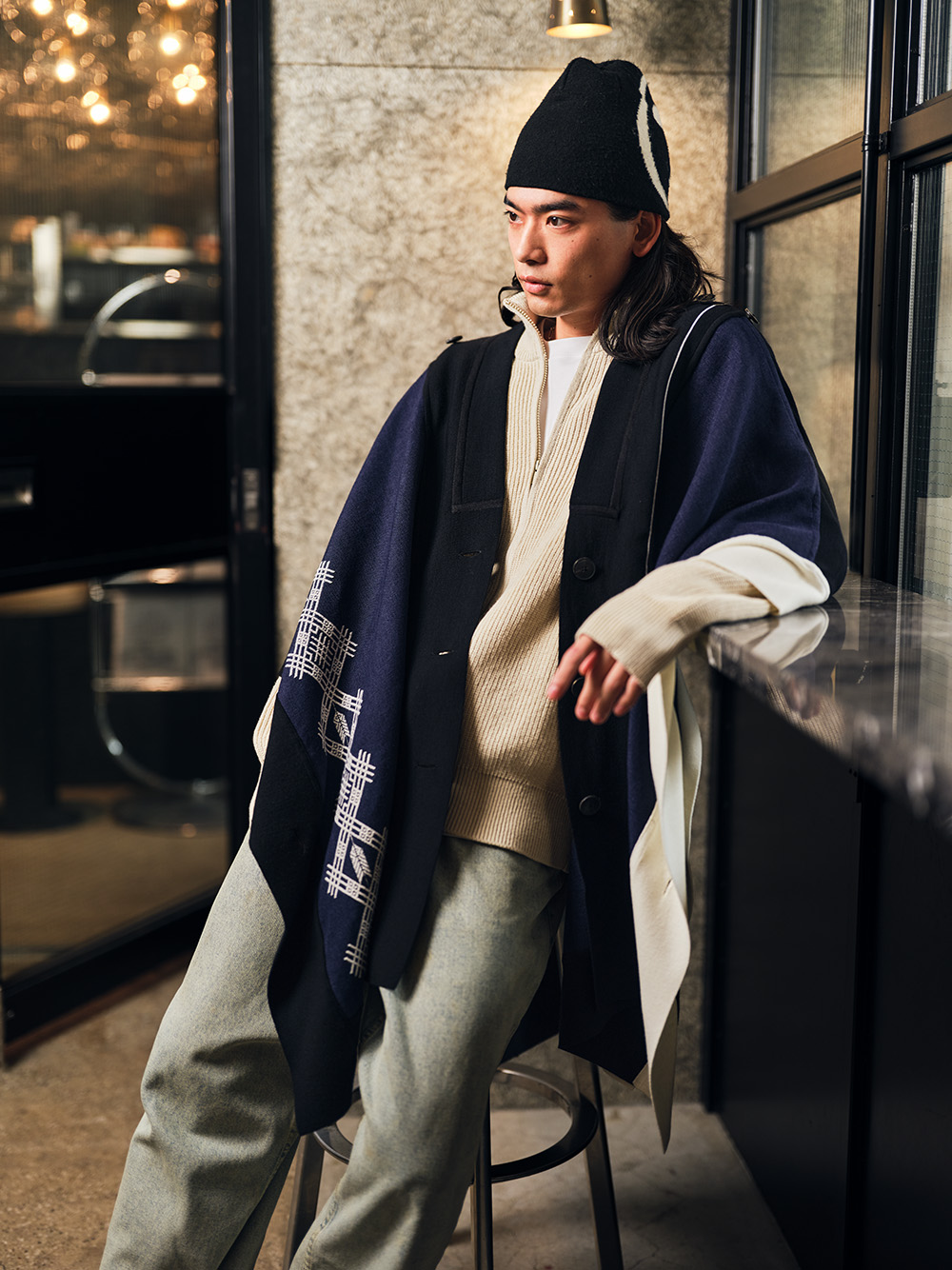
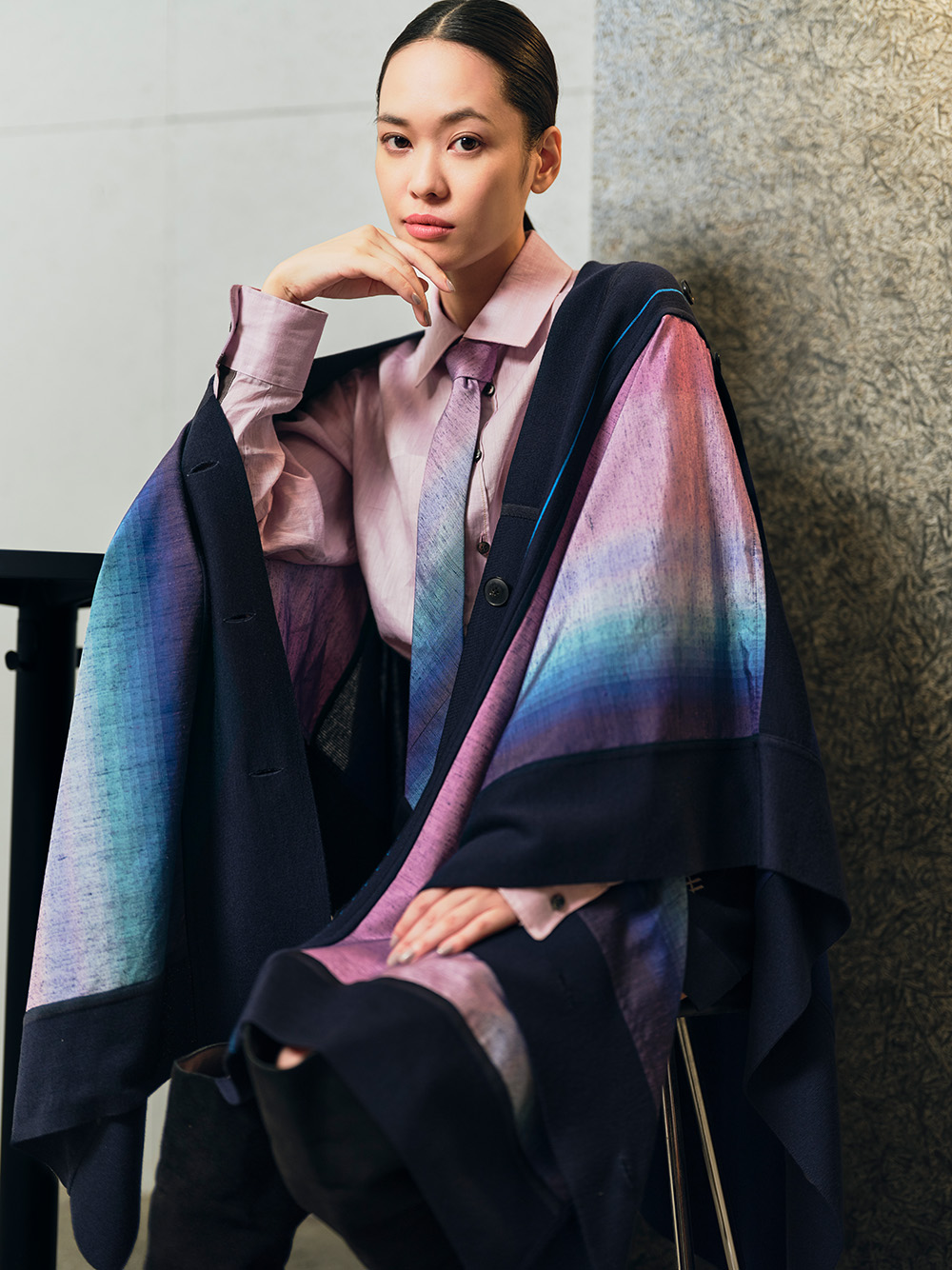
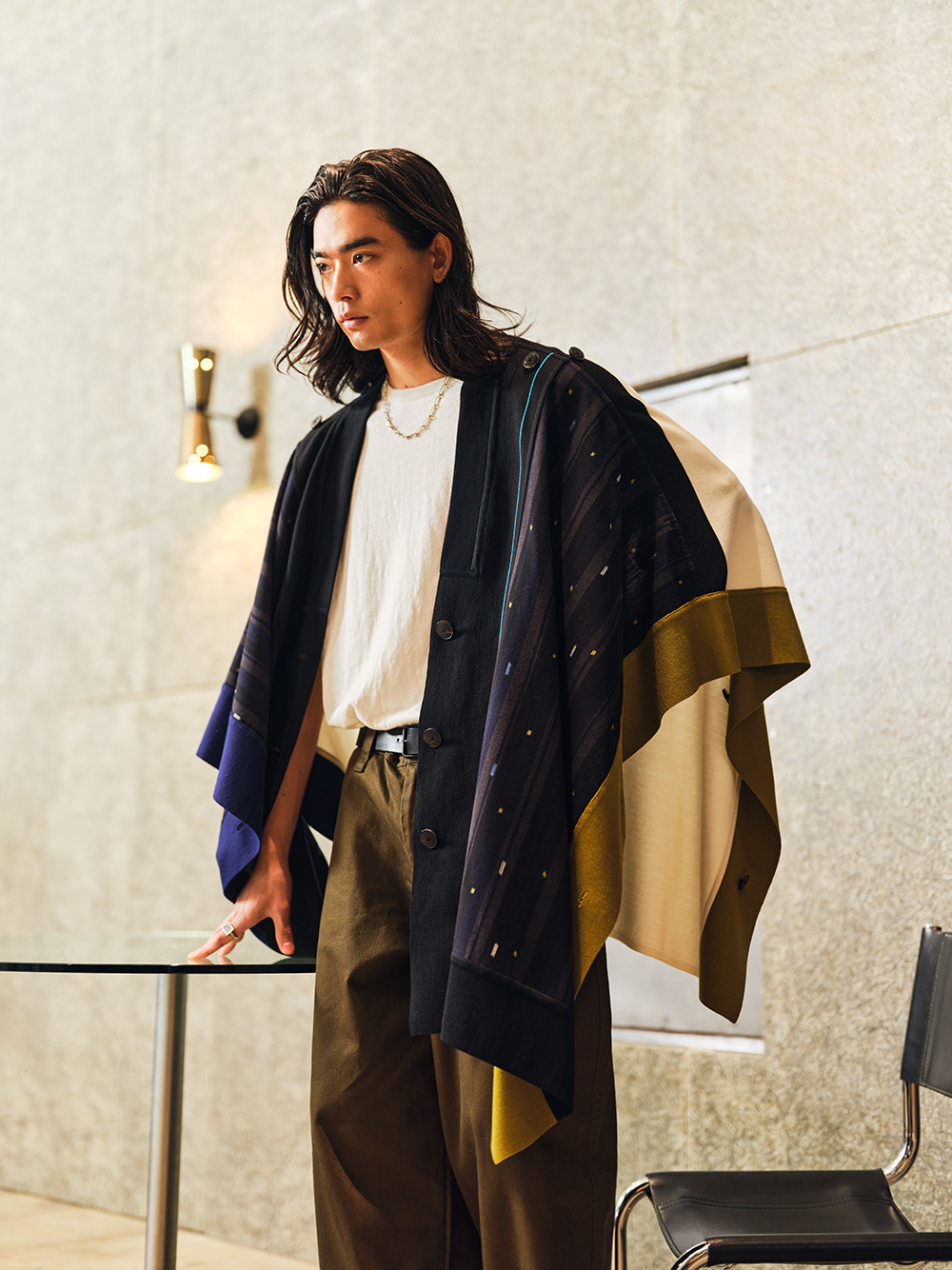
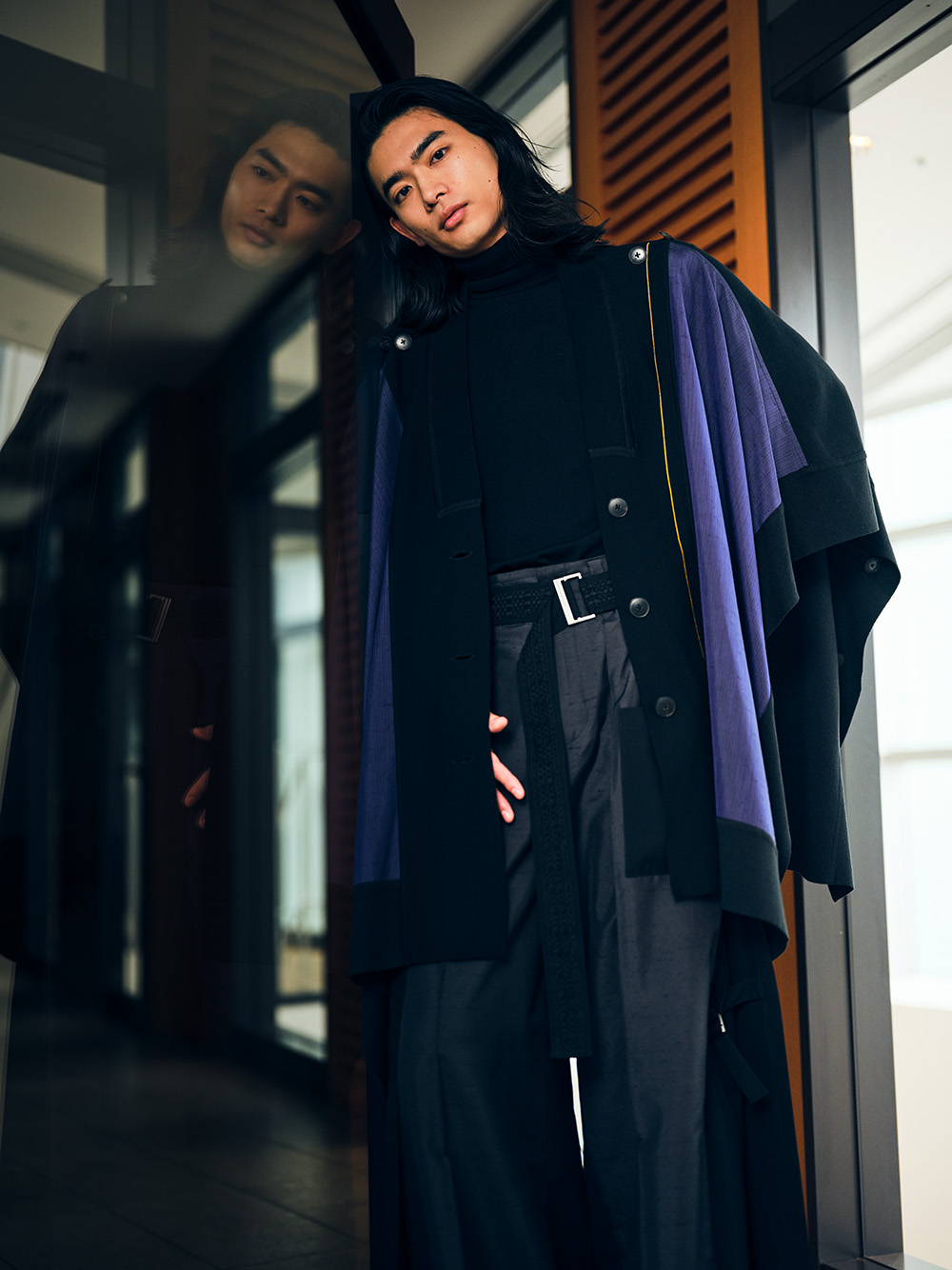
About 2026 AW collection
── Why have you chosen Tokyo (Rakuten Fashion Week TOKYO) as the venue for presenting your collection?
Our motivation for participating this season is to introduce MIZEN to a wider audience. Until now, we have prioritized carefully communicating the philosophy and stories behind our creations through more intimate channels. However, we felt it was time to present this perspective on a broader stage.
In particular, we see significant potential in reaching an international audience. We hope to share the value of Japanese handcraft—and the distinct sense of time embedded within it—with people beyond Japan. Through the global platform of fashion week, our aim is not simply to expand brand recognition, but to invite others to engage with the value system MIZEN proposes: slowing down, and looking at the essence of things with greater depth.
There is also meaning in presenting this work from Tokyo. As a project rooted in Japanese traditional craftsmanship, we believe it is important to articulate this philosophy from Japan outward to the world. Our participation this season represents an important step in that direction.
── What is the concept / image for your brand’s 2026 AW season?
Slow Fashion
── What is your vision for your show / installation?
In contrast to the speed-driven nature of contemporary fashion, we aim to present what becomes visible when that speed is intentionally slowed.
By drawing attention to technique, structure, and the traces of time that are often overlooked, we seek to reconsider the act of “seeing” itself. The space will invite viewers to pause and experience a sense of yohaku—room for interpretation and reflection.
Future
── What are your brand’s future outlook and goal?
Looking ahead, we intend to expand our activities with a more global perspective. This is not simply about entering new markets, but about exploring how the possibilities inherent in Japanese craftsmanship can resonate within different cultures and value systems around the world.
We hope to pursue this path alongside partners who share our vision and deeply empathize with the values we stand for. Rather than consuming technique, our goal is to elevate the time, human presence, and layered narratives embedded within it.
By expanding this practice beyond Japan, we aim to contribute to a future in which craftsmanship is recognized not as a relic of the past, but as a vital and evolving force within global culture.
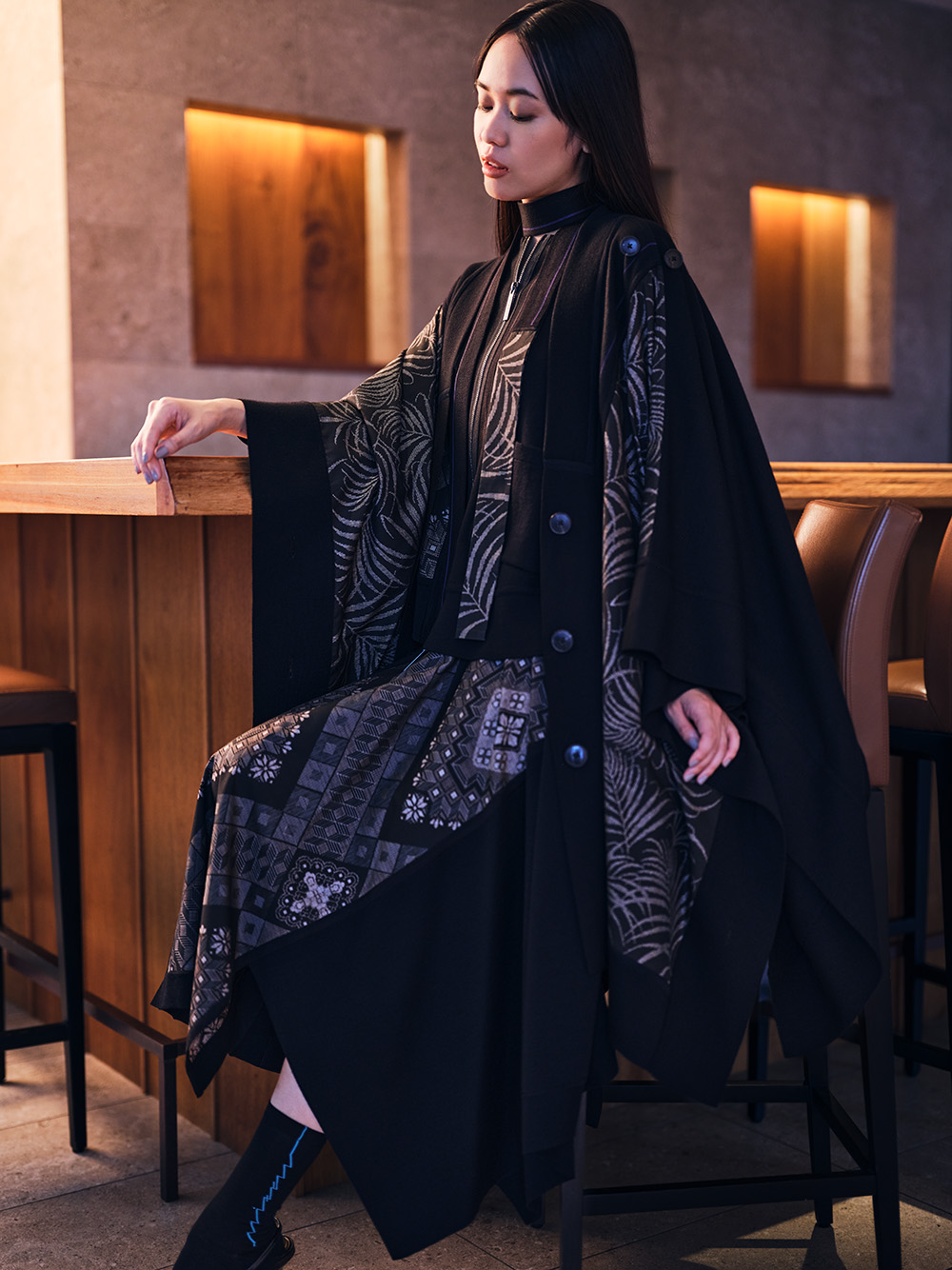
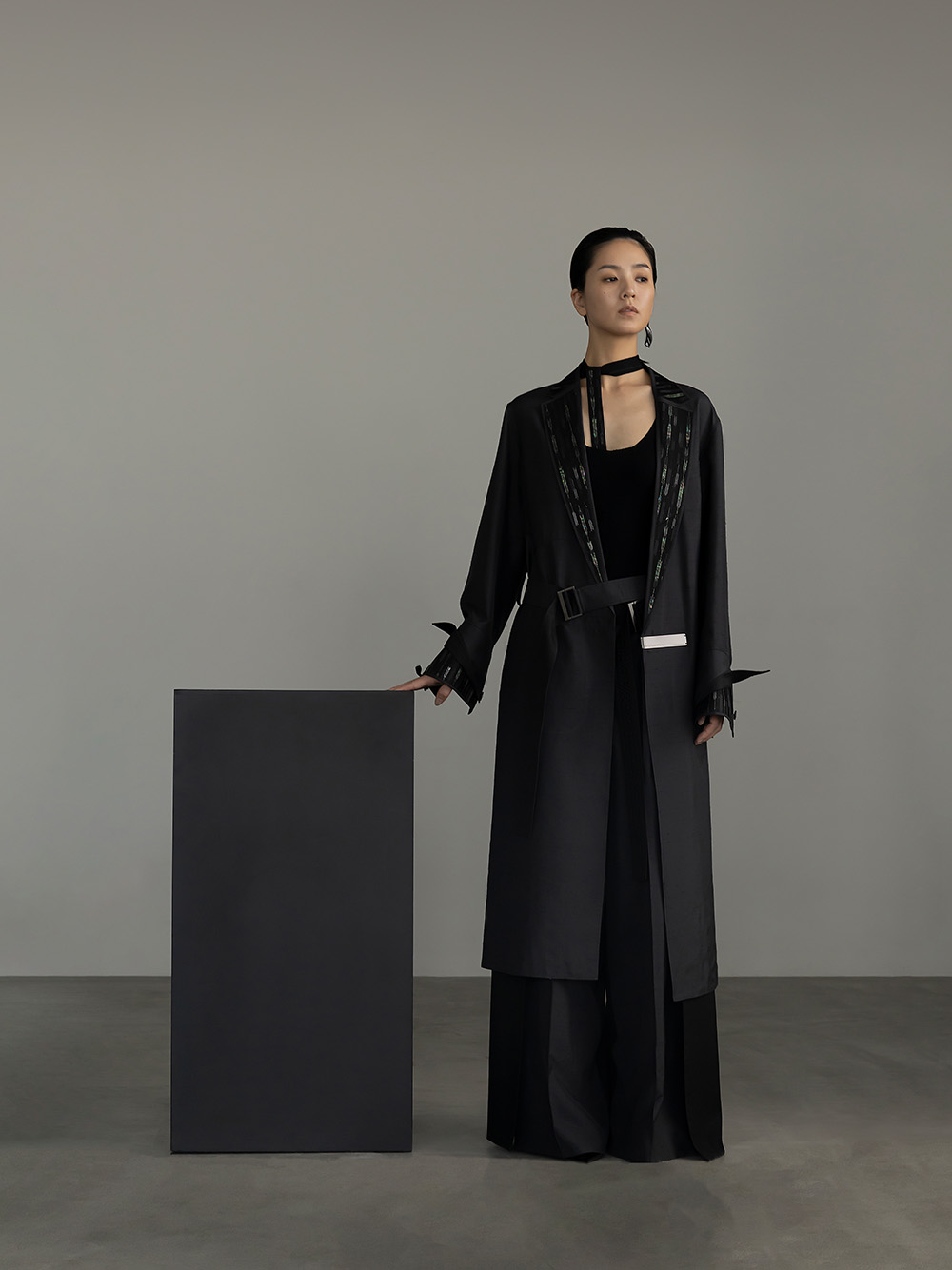

About TOKYO
── What does Tokyo represent for you?
To me, Tokyo is a city where everything converges. Information, people, culture, and global movements are constantly gathering and evolving here. In that sense, it is an intensely stimulating and energetic place.
At the same time, throughout Japan there are regions that may appear less convenient, yet continue to preserve their own rhythms of time and distinct cultural identities. Precisely because Tokyo concentrates so much, the presence of these regional areas becomes even more pronounced. They define one another through contrast.
For me, Tokyo is both a center and a place that makes us rediscover the value of the periphery. It is this duality—the coexistence of speed and stillness, concentration and distance—that gives Tokyo its unique character.
── Which parts / sites of Tokyo do you like most? Why?
Hiroo and its surrounding area. I feel it is a mature neighborhood with a calm atmosphere, relatively free from heavy crowds.
── What are your favorite / recommended shops (of any genres, e.g. fashion stores, homeware stores, food services), facilities and sites?
Maerge, KERMIS TOKYO, and wine living signature — all dining spaces I appreciate for their atmosphere and sensibility.